Job rotation

Job rotation offers a new perspective on professional growth
Job rotation is an excellent way to breathe new life into the workplace and give employees the opportunity to develop their skills. It brings variety and new challenges to the job. In this article, Liisa Selander and Jere Lehvonen share their experiences with job rotation and how it helped them grow professionally.
It all began when Jere Lehvonen joined Stora Enso as a shift supervisor. At this point, Liisa Selander, QHSE Manager, stepped into his shoes, arriving in Imatra from Corex’s Pori mill.
Both embarked on a journey of discovery to learn new things, and both have nothing but positive things to say about their experience.
Jere's adventure began by chance
Jere works as a department supervisor at Corex Finland. He has been working at Corex’s Imatra plant since 2007.
An unexpected opportunity arose for Jere to temporarily transfer to Stora Enso. Corex’s Imatra plant is located within the Stora Enso Imatra plant complex.
“I saw a supervisor recruiting in the hallway who asked if I’d be interested in a summer foreman position,” Jere recalls.
Stora Enso needed a shift foreman for its coating machines for six months, whose job was to serve as the lead operator for four coating machines during a shift. Jere was excited by the idea of learning something new and getting some variety in his work.
Jere checked with the plant manager at Corex, who gave the idea the green light. So Jere ended up working at Stora Enso for the summer.
In a new setting, in the same building
Job rotation provides opportunities for professional development by allowing employees to take on different roles. In this case, Jere moved to a completely new environment to familiarize himself with a former client’s processes.
Jere started at the Stora Enso mill in April and worked there until the end of September. He received a thorough orientation lasting just over a month before taking on the work independently.
– I jumped into a place where I didn’t know the people or the process beforehand. This gave me the opportunity to assess my personal development in supervisory and process management work. Basically, I was stepping into completely new territory.
Lots of new things at the larger factory
Corex’s Imatra mill manufactures cores for Stora Enso’s Imatra mills, one of the world’s largest consumer board mills. Jere worked as a shift supervisor for four coating lines.
Coating machines improve the barrier properties of paperboard to meet the requirements of various food packaging applications, such as liquid packaging. One of the new aspects of the job was that the shift supervisor for the coating machines is responsible for four machine lines in three different buildings. Corex’s Imatra plant operates in the same building as two coating machine lines.
The coating machine process is also more complex and requires expertise. The process was new to Jere, but on the other hand, the work itself shares many similar features.
– Both jobs involve maintenance and problem-solving. To some extent, the maintenance processes are similar. However, there is more technology at the Stora Enso plant and the equipment fleet is larger, so everything there was new and exciting.
Experience with shift work and night shifts
Jere has always been interested in technology, and the job rotation gave him the chance to learn new things. The biggest benefit of the rotation, however, was managing a group of people he had never met before. Jere didn’t know any of his teammates, of whom there were more than twenty.
“I was met by a professional and friendly group, and everyone welcomed me warmly,” he says gratefully.
Jere had worked as a production worker at Corex’s Imatra plant for nine years before becoming a department foreman in 2016. As a result, he had become very familiar with both the people and the process. In that sense, too, the job rotation brought a welcome change to his daily routine.
At Stora Enso, Jere worked three shifts, each lasting 12 hours. Jere hadn’t worked shifts in nearly 10 years.
– The night shifts in particular made me nervous—I wondered how I’d get used to them.
In the end, the first six months went well, and Jere had no problems with stamina or sleep. The job rotation refreshed his understanding of shift work and its associated challenges.
“For example, during the last few hours of the night shift, you can’t expect an employee to be as alert as they are during the day. On the other hand, a professional knows how to handle their tasks even when they aren’t at their most alert.”
For others considering a job rotation, Jere has this advice:
– It’s worth challenging yourself and striving to grow. It makes life more interesting!
Finally, Jere would like to thank Lea Jaatinen, plant manager at Corex’s Imatra plant, whose support made his six-month assignment with Stora Enso possible.
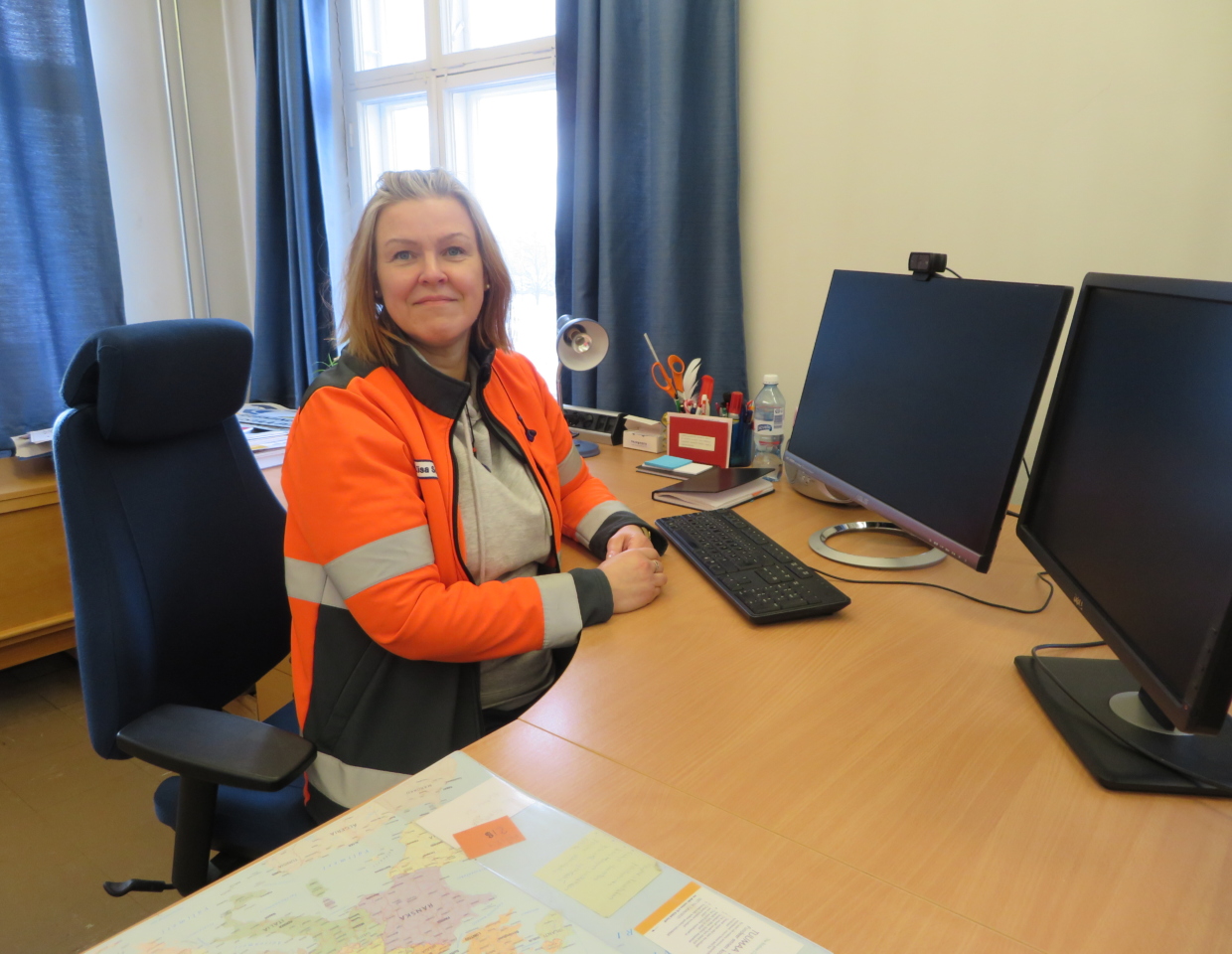
Liisa moved from Pori to Imatra
An opportunity arose for Liisa Selander to transfer from Pori to Imatra as part of a job rotation when the company was looking for someone to fill in for Lehvonen. Her supervisor suggested the idea to Liisa, who was enthusiastic about it.
“Safety is very important to us, and now an opportunity has opened up to do benchmarking within the company and to get to know the operating practices of a large organization (StoraEnso). In addition, the job rotation fit my life situation perfectly at that moment.”
Liisa also has ties to Imatra, as she has relatives there. She herself used to live in Imatra and worked at StoraEnso’s research center.
In Pori, Liisa is responsible for the mill’s environmental, quality, and occupational safety matters. Her work involves a lot of reporting to authorities and investigative work—that is, independent work done behind the scenes that isn’t always visible to the outside world. She has held this position since 2017.
In Imatra, Liisa took over as shift supervisor, filling in for Jere. The shift supervisor is responsible for ensuring the plant’s operational activities and that there are enough staff on site.
– The plant operates 24/7, and our client, Stora Enso, is practically on the same premises. The results of our work are visible at the plant very quickly.
Alternating weeks in Imatra and Pori
Liisa worked in Imatra every other week in close collaboration with Plant Manager Lea Jaatinen, and she also met Jere, since they worked in the same building. At first, Liisa received an orientation from Jere.
Liisa’s transition to the Imatra plant was greatly facilitated by the fact that she was already familiar with Plant Manager Lea from her time at the research center, as well as with the factory environment and, to some extent, the systems.
Working every other week at both locations was the only solution for Liisa due to family reasons.
“The job rotation was mainly about proving to myself that I could do this.”
Liisa was intrigued by the opportunity to learn something new, even though she also learns and gets to continuously develop her professional skills in her own job. On the other hand, learning something new was also nerve-wracking, and Liisa wondered how she would manage it.
“There were challenges, but I always managed to get through them somehow. The factory workers helped me a lot with this; they welcomed me warmly and with an open mind. They are professionals who were always there to help me. In tough situations, they used their experience and knowledge to guide me on how to get the job done. A big thank you to each and every one of them!
Thanks to the job rotation system, cooperation among the factories has deepened
The job rotation provided Liisa with much-needed variety and new learning experiences. For example, the Stora Enso rules and occupational safety guidelines followed in Imatra can also be useful at the Pori site.
The job rotation opened up new perspectives for Liisa and provided her with valuable information that she has been able to apply in her own work. Thanks to the job rotation, Liisa now has a deeper understanding of how the coreboard mill—the Pori mill’s internal customer—operates. Issues related to process and quality that are important to the core box factory became clearer, and going forward, Liisa will be able to share this internal knowledge at the paperboard mill.
The job rotation period naturally had its own challenges, particularly regarding working at two different locations. The distance from Pori to Imatra is 425 kilometers. In addition, the work pressure increased as she worked at two different locations.
– On Monday mornings, I always started as if from scratch. I had to figure out where I was and what I was doing, especially in Imatra, until the routine settled in.
Liisa says she is grateful that both Imatra and Pori gave her the opportunity to participate in the job rotation. She wants to send a message to everyone considering a job rotation:
“Seize the opportunity!”